|
    |

Pandemic Documentary: Negotiating “Cramped Space”
Editorial
Oliver Brett and Rhiannon Harries
[PDF]
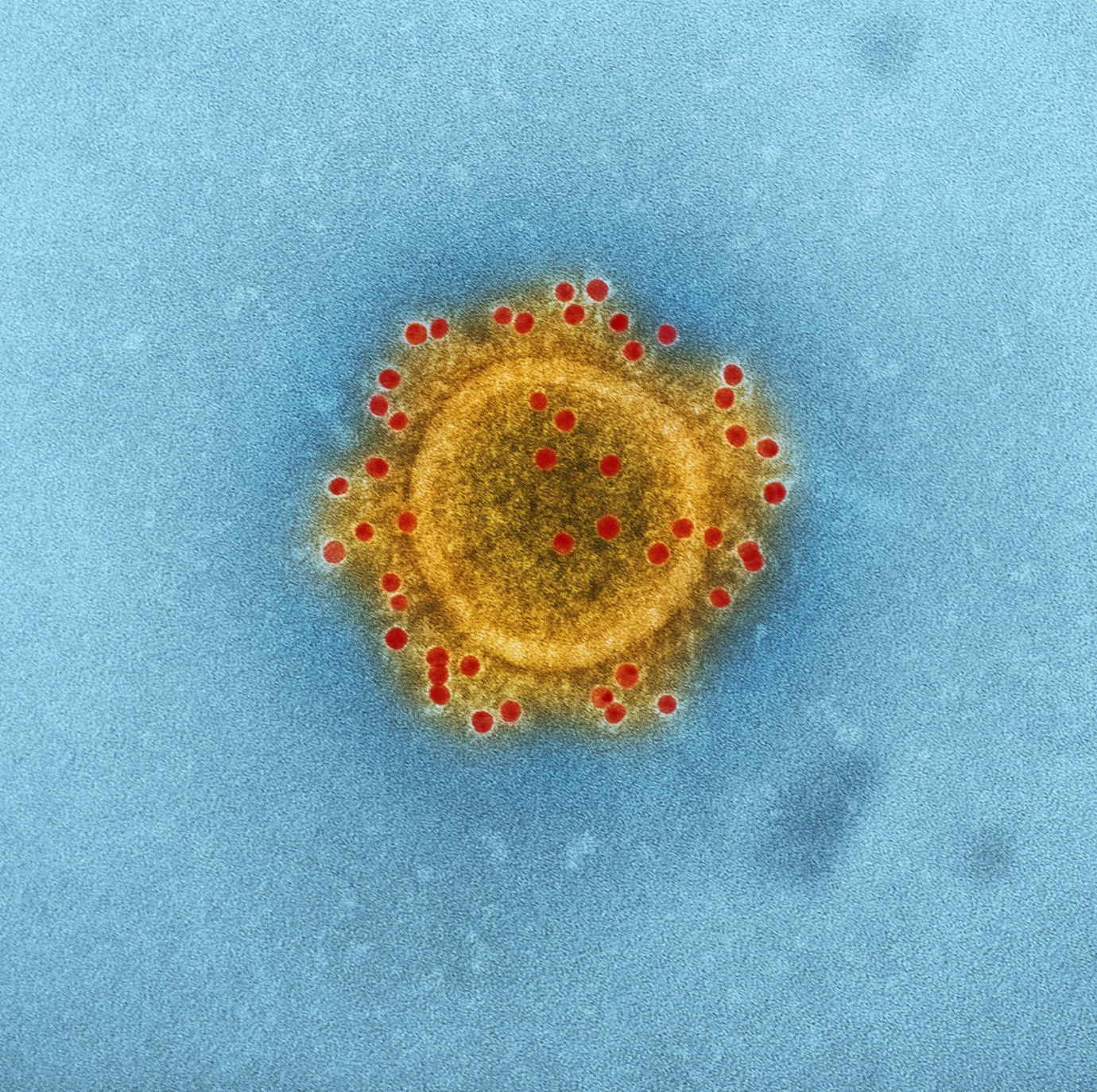
Figure 1: “High-resolution image of coronavirus particle under electron microscope.” Pexels, 23 March 2020.
This issue of Alphaville developed from a conference held at the University of Nottingham, UK, in June 2023, where the concept of “cramped space” in pandemic documentary was first explored. The conference sought to extend discussion beyond a “virus-centric” perspective which has often framed pandemics as a binary between the “catastrophic” and “non-catastrophic” (Doshi 532, 534). In the context of parallel tensions between fact and fiction, and truth and conspiracy within a widespread “infodemic” (World Health Organization), it was necessary to consider what forms “documentary”—with its traditional claims to the “real”—could take under conditions of restricted movement and constrained resources, including limited access to subjects.
Rather than approaching pandemic experience as an all-encompassing and immutable condition imposed from the outside, the work of Gilles Deleuze and Félix Guattari on “cramped space” in “minor literature” (17) allowed for a recognition of both the immediacy of the situation (including a sense of restriction in material and affective terms) and the social and political dynamics connecting the individual to the collective. The significance of working with limited resources in this context is made clear by William Walters and Barbara Lűthi:
Cramped space […] forces its subjects to be creative and experimental, to pursue politics at the limit and fashion lives with whatever materials, languages and identities they find close at hand. No ready-made trajectories are available under cramped conditions, and non-linear mobility is part of the experience. Actions in this context are not linear and clearly determinable, but rather saturated by fleeting imponderableness and moments of uncertainty. (362)
Initial discussions at the conference focused on bricolage, colour, comedy, conspiracy theory, and creative writing, alongside sustainable filming methods and graphic governance. In this collection, these discussions consolidate around three interconnecting themes: representation problematised, witnessing and remembering as survival, and rethinking documentary practice. While these are not discrete themes—as many issues may be seen to overlap across the contributions—they each raise specific questions: How is crisis made visible when existing representational forms are under pressure? How can documentary preserve lived experience while mobilising a political response during crisis? How do the conditions of crisis reshape how documentary is conceived and produced?
The first theme, focusing on the instability of representation under crisis, highlights how established forms and practices become inadequate, contestable, or in need of reinvention, exploring how truth, evidence, and historical experience might otherwise be made legible. In her contribution, Rhiannon Harries interrogates how the digital world, as represented through WhatsApp messaging, acquires a symbolic quality mimicking the ambivalence of institutional frameworks and infrastructures. In Ruth Maxey’s essay, she analyses how colour is exploited as a documentary strategy articulating experiences of vulnerability and risk. Oliver Brett argues that comedy reveals the beliefs and desires that simultaneously enable and constrain responses to crisis, foregrounding the affective attachments through which collective sociopolitical traditions frame experiences of uncertainty. The final contribution under this theme, by Brittany Bernard, explores how domestic filmmaking practice recasts broader collective experiences of loss and uncertainty through the centring of perspectives from the margins. Taken together, these contributions expose the limits of established documentary forms while opening space for new practices in response to challenging sociopolitical and affective conditions.
The second theme, witnessing and remembering, considers the urgency and persistence of crisis. Instead of approaching documentary as a means of simply preserving lived experience, the contributions by Amy Betram, and Wikanda Promkhuntong and Natthanun Tiammek, explore how witnessing and remembering can sustain political engagement long after the initial crisis. Produced at a point when public memory of the pandemic was beginning to recede, their video essays register an urgency to record experience as resistance and survival, and collective remembrance. Though otherwise very different, both contributions draw upon reflexive and participatory documentary modes (Nichols 180, 194) in articulating politically and ethically engaged practices based in personal testimony, professional experiences, social connections, and archival traces. They position memory as central to a reactive documentary practice through which the impact of crisis continues to be negotiated and mobilised.
The collection’s final theme—rethinking documentary practice—shifts our focus towards processes, methods, and material conditions. Patrick Tarrant foregrounds the generative role of error within practice-based research, exploring how the combination of montage and accidental mistranslation might allow new forms of institutional critique. For Richard Whitby, sustainable filmmaking practice resists a return to neoliberal modes of production, redirecting attention towards openness, collaboration and dialogue, and experimentation. Finally, Pinar Fontini draws on Dallas J. Baker’s concept of “queered practice-led research” as a methodology that expands the possibilities of queer research and creative output when access to resources is limited. Across these three contributions, documentary practice is positioned as a site of critical engagement, demonstrating how methods of production respond to constrained conditions while imagining alternative ways of exploring and navigating crisis.
In the three thematic sections, “cramped space” emerges not only as an object of documentary representation, but as a condition that shapes forms, resources, and practices—a relationship we conceptualise as “cramped documentary”.
Representation Problematised
In “Seeing the Opioid Epidemic through COVID-19: Ambivalent Aesthetics in The Family Statement (2023)”, Harries considers how the film’s use of WhatsApp messages drawn from Purdue Pharma’s publicly available bankruptcy proceedings creates a “spectral digital presence” framing the Sackler family as a metonym for broader systems of care that may be simultaneously protective and harmful. Harries argues that this ambivalence extends beyond the pharmaceutical industry to include the digital communication technologies (in this case, WhatsApp) that were used intensely during the pandemic period in facilitating both social cohesion and the distribution of often harmful encrypted messages and information. Harries’ analysis challenges how risk is assessed during social upheaval and crisis, highlighting how systems that present as sources of protection can also reproduce forms of vulnerability and harm. Her analysis also expands understandings of what documentary enquiry can look like in a digitally mediated environment.
In “Pandemic Documentary and Graphic Narrative: Race, Disability, and the Chromatic Language of In/Vulnerable: Inequity in the Time of Pandemic”, Maxey builds upon established scholarship concerning the documentary impulse of graphic narratives by turning her attention to the comparatively undertheorised aspect of colour, drawing on the collaborative work of Thi Bui and Reveal journalists produced during the period. Maxey argues that Bui’s varied palette stands in marked contrast to a wider tendency within graphic narratives of using monochrome or dark colour schemes to evoke confinement, isolation, and crisis. For Maxey, colour functions as a form of documentary “truth” that allows the images—usually accompanied by minimal written text—to engage readers in actively exploring potential meaning. Maxey argues that the polychromatic in Bui’s text exposes the political and economic inequalities of the collection’s fifteen individual stories while also forging connections that allow the racialised dimensions of disability, care work, and death to surface. Maxey’s analysis broadens a much-needed discussion of polychromatic formal structuring within graphic narratives, making clear the widespread cultural and political disavowal of vulnerability and inequality laid bare during the pandemic in the US.
In “Allegories of Pandemic Governance: Comedy, Cramped Space, and National Imaginaries in European Cinema”, Brett examines three commercial films produced during the COVID-19 crisis in Italy, France, and the UK: Enrico Vanzina’s Lockdown all’italiana (2020), Dany Boon’s Stuck Together (8 Rue de l’Humanité, 2021), and Doug Liman’s Locked Down (2021). Drawing on Lauren Berlant’s concept of “cruel optimism” (2), Brett argues that these films reproduce the respective national pandemic response while negotiating ingrained sociopolitical traditions that reveal attachments that simultaneously sustain and constrain collective response. Although works of fiction, the films reflect documentary modes of witnessing and historical engagement in the affective realities of crisis. Through comedy, the films interrogate assumptions about the “real” while positioning fiction as a valuable mode of inquiry during periods of social upheaval, particularly given restricted access to usual resources. Brett asserts that the films reflexively question prevailing understandings of community responsibility and governance, imagining alternative possibilities for responding to crisis in the decentring of established power structures, the reclaiming of agency from below, and the challenging of neoliberal rationalities.
In “Frames of Isolation: Recording Memory and Loss in Mati Diop’s In My Room”, Brittany Bernard draws on Michael Renov’s notion of “domestic ethnography” (229) to examine how Diop frames and reframes uncertainty from within an intimate domestic space, a strategy reinforced through the layering of sound and voice. Bernard demonstrates how these formal choices allow the constrained physical environment—and the objects and ambient features that Diop inhabits and records—to bear witness to a shared global crisis. She explores how the montage of music, art, and cinema connects personal experiences of isolation and loss to broader collective histories, particularly through her grandmother, Maji, whose decline surfaces through photographs and her intermittent voiceovers. In her analysis, Bernard recentres the “home movie” as a form capable of documenting major crises, demonstrating how perspectives from the margins can reshape the central frame of historical and cultural representation.
While the first thematic section establishes representation as the main focus across a range of media and genres, the second develops this by examining how memory may be a documentary source that stimulates collective political action.
Witnessing and Remembering as Survival
In “The Harold Scott Story: Remembering and Documenting an Activist, Educator, Thirty-five-year HIV/AIDS Survivor”, Bertram focuses on the ongoing inequalities of the rural experience of HIV care in the US, epitomised through the story of activist and educator, Harold Scott. Bertram demonstrates how traces from the past—personal objects and stories, and archival materials reflecting her experiences as a teacher, researcher, and close family friend of Harold—are only productive when continually activated and disseminated. Bertram’s academic and practical work recognises the transformative potential of viruses, revealing how connecting viral histories can sustain intergenerational, interpersonal, and interprofessional relationships, and collective ideas surrounding what continues to matter in social and political terms regarding compassionate and humane healthcare.
In “Memories of COVID-19 by Thai Film Crews: Encountering and Navigating Film Sets (Not) as Cramped Spaces”, Promkhuntong and Tiammek situate the responses of screen workers to restrictions on filmmaking practice within the wider political backdrop of unrest in Thailand. The video essay is organised around three themes: adapting often limited resources to meet production demands, the embodied and affective experiences of labour and working on set, and practices of self-regulation that bypass official forms of surveillance, creating filmmaking spaces as not cramped. Against the political backdrop, these practices can be read as strategies for negotiating overlapping regimes of state control and precarity. The video essay thus operates as a “minor documentary” in its construction, positioned within and counter to dominant forms of language and control, and attentive to a localised biopolitics concerned as much with surviving surveillance (to make a living) as with mitigating the risk of viral transmission. It also operates as a memory artefact, not simply by recording the recent past but by acting as a generative force through which experiences are reinterpreted and transformed into new forms of representation and meaning.
Building on these questions of representation and memory, the final theme turns specifically towards documentary practice in considering the material and methodological conditions through which such representations are produced.
Rethinking Documentary Practice
In “‘Mandatory Training’, Online Teaching, and Dialectical Space”, Patrick Tarrant demonstrates in his video how error and failure—in this case created through the audio transcription of a mandatory Equality, Diversity and Inclusion e-learning module by auto-translation technology—allow a “figural” space (Andrew 158) to emerge between two different representational domains: the original e-learning audio and filmed Bolex magazines shot with a Bolex camera. The figural reflects the impossibility of asserting stable meaning across these domains, each constrained in its capacity either to accommodate or to acknowledge such instability. It is within this indeterminate space however—one described by Tarrant as “squeezed” from different angles—that new political meanings have the potential to emerge, countering the collective control of knowledge exercised by corporate and institutional forces.
In “Making Dreams of Safety—A Series of Online Videos”, Whitby reflects on his filmmaking practice during the COVID-19 pandemic as a means of potentially responding to future crises. He discusses his collection of experimental videos published on YouTube from 2021 onwards—Dreams of Safety—which are shaped by practical, low-cost, and environmentally conscious production methods. Rather than aiming for the completed project, Whitby outlines his move towards a more independent experimental filmmaking practice that seeks to operate outside neoliberal models of production, placing interviews at the centre of the creative process and prioritising openness and responsiveness in an ongoing dialogue. Central to this approach is a desire to remain “awake” and to resist a return to the dreams (or systems of control) that claim a pervasive equality while often simultaneously evading responsibility. His practice within this series of videos is largely unplanned and iterative, shaped by the immediacy of the conversations he has with others and around which he constructs “audiovisual contexts” through DIY techniques, animation, and online capture. Through this iterative process, he creates videos that result directly from the conditions in which they are produced, connecting stories at an international level and on issues of identity, geographical location, and professional roles.
In “Dream Workers: A Filmmaking Journey During the Pandemic”, Fontini explores the conditions under which she developed her doctoral research project into the feature-length documentary Dream Workers. Fontini’s video essay recounts how “instability” as a queer filmmaking methodology enabled her and collaborators to adapt to changing circumstances amid the intersecting pressures of lockdown and broader sociopolitical and cultural constraints in Turkey. This involved repurposing objects and spaces beyond their intended functions as sites for reflecting both on the past and imagined feminist futures. In turn, the video essay reflects the methodological choices and emotional journey that shaped the development of the documentary.
Figure 2: “Cinema, Projector, Home.” Image by Antonio Cansino, published on 21 April 2020 during the COVID-19 pandemic.
Conclusion: “Cramped Documentary”
As a collection, these contributions demonstrate how pandemic documentary practice was driven less by technological innovation than by creativity, experimentation, and engagement with social and political constraint. Documentary practice drew on a wide range of resources to produce new ways of representing and responding to crisis, including material objects, domestic spaces, digital technologies, affective attachments, memories, and social relationships.
Throughout the collection, “cramped space”— drawing on Deleuze and Guattari’s concept of minor literature—is articulated as a social and political condition negotiated across competing structures of authority during a period of intense information overload. The contributions repeatedly position this space in relation to structures of control, the recognition of shared vulnerabilities, and perspectives emerging from the margins.
Jihoon Kim’s concept of “expanded documentary” captures the diversification of documentary forms during the COVID-19 crisis, including the increased reliance on digital platforms, remote collaboration, data visualisations, vlogging, and drone imagery. Kim’s emphasis on the renewal of documentary to a broader “ecosystem” of practice is persuasive, although it has the potential to obscure the uneven conditions under which participation occurred. Access to digital technologies was highly unequal (Yates and Carmi), a situation compounded by inadequate preparation for the rapid move towards digital modes of communication and production (Bernardi, Giammanco, and Mißler).
The contributions considered here are also situated within forms of privilege, both in the documentary practices they examine and in their own capacity to participate in academic debate. However, their common concern is not with documentary renewal or technological progression; instead, they repeatedly return to practices defined by working with whatever resources are available and by transforming material constraints into forms of political expression. As such, the collection suggests that material limitation as a productive starting point for pandemic media representation requires further theoretical attention.
Daniel Rudin argues that the technological infrastructures of contemporary documentary frequently promise innovation while simultaneously concealing a cyclical return to earlier aesthetic forms. Drawing on Walter Benjamin’s concept of art as a continual process of creation and erasure, Rudin suggests that what Kim identifies as “expansion” may not mark linear progress but rather a renewed confrontation with the limits of technology and mediation (89). Rudin’s critique reinforces the position advanced across this collection, that pandemic documentary emerges through recurring engagements with representational, affective, and material constraints.
In foregrounding the political potential of apparently constrained modes of documentary making, the contributions bring themes of representation, remembering, and practice into a shared framework that we term “cramped documentary”. Documentary artefacts were not assembled retrospectively after a completed event; they were produced as the pandemic unfolded in response to an uncertain present. In this context, cramped documentary describes a mode that works within established documentary languages and forms while simultaneously negotiating the wider discursive structures through which crisis is represented and understood. Resourceful and formally adaptive, cramped documentary is attentive to relations between individual and collective experience, and to unequal access to movement and care, technology and representation. Rather than simply recording crisis, cramped documentary responds to the instability of the present, revealing how documentary practice can negotiate uncertainty, challenge dominant frameworks of meaning, and create new possibilities for political engagement.
Acknowledgement: This publication was made possible through the generosity of the University of Nottingham, which supported both the initial research proposal and subsequent conference. We would also like to thank our reviewers and authors for their valuable contributions, as well as Laura Rascaroli, Editor-in-Chief, and the wider team at University College Cork, for their continued guidance and support throughout the editorial process.
References
1. Andrew, Dudley. Concepts in Film Theory. Oxford UP, 1984.
2. Baker, Dallas J. “Queering Practice-Led Research: Subjectivity, Performative Research and the Creative Arts.” Creative Industries Journal, vol. 4, no. 1, 2011, pp. 33–51, https://doi.org/10.1386/cij.4.1.33_1.
3. Berlant, Lauren Gail. Cruel Optimism. Duke UP, 2011, https://doi.org/10.1515/9780822394716.
4. Bernardi, Verena, Amanda D. Giammanco, and Heike Mißler, editors. Covid-19 in Film and Television: Watching the Pandemic. Routledge, 2022.
5. Boon, Dany, director. Stuck Together. Pathé Productions, 2021.
6. Cansino, Antonio. “Cinema, Projector, Home.” Pixabay, 21 April 2020. https://pixabay.com/photos/cinema-projector-home-video-movie-5069314/.
7. CDC. “High-Resolution Image of Coronavirus Particle Under Electron Microscope.” Pexels, 23 March 2020, https://www.pexels.com/photo/microscopic-shot-of-a-virus-3993213.
8. Deleuze, Gilles, and Félix Guattari. Kafka: Toward a Minor Literature. Translated by Dana Polan, U of Minnesota P, 1986.
9. Diop, Mati, director. In My Room. Miu Miu, 2020.
10. Doshi, Peter. “The Elusive Definition of Pandemic Influenza.” Bull World Health Organ, vol. 89, no. 7, 2011, pp. 532–38. https://doi.org/10.2471/BLT.11.086173.
11. The Family Statement. Directed by Grace Harper and Kate Stonehill, Field of Vision, 2023, https://fieldofvision.org/shorts/the-family-statement. Accessed 28 Jan. 2026.
12. Fontini, Pinar, director. Dream Workers. MUBI, 2022.
13. In/Vulnerable: Inequity in the Time of Pandemic. Illustrated by Thi Bui, series edited by Amanda Pike and Esther Kaplan, interviews by Reveal staff, adapted into comic scripts by Sarah Mirk, Reveal and The Nib, 2020, revealnews.org/in-vulnerable. PDF version.
14. Kim, Jihoon. “Data Visualizations, Vlogs, Drone Imagery: Expanded Documentary Forms in the COVID-19 Emergency”, Film Criticism, vol. 45, no. 1, 2021, https://doi.org/10.3998/fc.1060.
15. Liman, Doug, director. Locked Down. Warner Bros., 2021.
16. Nichols, Bill. Introduction to Documentary. 2nd ed., Indiana UP, 2010.
17. Renov, Michael. The Subject of Documentary. U of Minnesota P, 2004.
18. Rudin, Daniel. “Historicizing Twenty-First Century Documentary: A Review of Jihoon Kim’s Documentary’s Expanded Fields: New Media and the Twenty-First-Century Documentary and Kate Nash’s Interactive Documentary: Theory and Debate.” Studies in Documentary Film, vol. 18, no.1, 2024, pp. 84–90. https://doi.org/10.1080/17503280.2023.2270945.
19. Tarrant, Patrick, director. “Mandatory Training.” 2021, patricktarrant.com/pages/training.html. Accessed 12 Feb. 2026.
20. Vanzina, Enrico, director. Lockdown all’Italiana. Medusa Film, 2020.
21. Walters, William, and Barbra Lűthi. “The Politics of Cramped Space: Dilemmas of Action, Containment and Mobility.” International Journal of Politics, Culture and Society, vol. 29, 2016, pp. 359–66. https://doi.org/10.1007/s10767-016-9237-3.
22. Whitby, Richard. Dreams of Safety. YouTube, https://www.youtube.com/@dreamsofsafety6951. Accessed 12 July 2026.
23. World Health Organization. “Infodemic.” World Health Organization, https://www.who.int/health-topics/infodemic/the-COVID-19-infodemic. Accessed 4 July 2026.
24. Yates, Simeon, and Elinor Carmi, editors. Digital Inclusion: International Policy and Research. Palgrave Macmillan, 2024, https://doi.org/10.1007/978-3-031-28930-9.
Suggested Citation
Brett, Oliver, and Rhiannon Harries. “Pandemic Documentary: Negotiating ‘Cramped Space’. Editorial.” Alphaville: Journal of Film and Screen Media, no. 31, 2026, pp. 1–9. DOI: https://doi.org/10.33178/alpha.31.00
Oliver Brett is an Assistant Professor of Adult Nursing in the School of Health Sciences at the University of Nottingham. Drawing on both clinical experience and postgraduate research training in the arts and humanities, his interdisciplinary scholarship examines documentary film and visual culture, with a particular interest in how individual and collective identities are constructed through experiences of health and illness.
Rhiannon Harries is Assistant Professor of Film at the University of Nottingham. Her research focuses on questions of aesthetics, ethics, and politics in contemporary documentary film. She is the coeditor of Education in Contemporary French Film (Liverpool UP, forthcoming) and of Land, Seas, Bodies—On the Cinema of Gianfranco Rosi, a special issue of the Journal of Italian Cinema and Media Studies.