|
    |

Seeing the Opioid Epidemic through COVID-19: Ambivalent Aesthetics in The Family Statement (2023)
Rhiannon Harries
[PDF]
Abstract
This piece examines the short film The Family Statement (Grace Harper and Kate Stonehill, 2023) as a response to the US opioid epidemic shaped by the production constraints of the COVID-19 pandemic. Reconfigured during lockdown from a planned vérité feature into a fifteen-minute short, the film centres on WhatsApp messages exchanged among members of the Sackler family and recovered from bankruptcy proceedings against Purdue Pharma. Superimposed over static exterior images and intercut with observational footage, the messages foreground tensions between care and harm. Situating the film within contemporary screen representations of the opioid crisis, I argue that its fragmentary digital form registers a broader ambivalence shared by the pandemic and the epidemic: a crisis of trust in institutions and structures that promise care while exposing individuals and groups to unequally distributed harm. By resisting documentary’s “mode of emergency,” the film offers a meditation on neoliberal family structures, systems of care and the politics of digital mediation.
Article
The Family Statement (Grace Harper and Kate Stonehill, 2023) is a fifteen-minute film released on the website of Field of Vision, a documentary production unit that supports innovative short- and long-form nonfiction filmmaking about global affairs. Made during the COVID-19 pandemic, the short film offers a revealing case study for considering how restrictions imposed by one health crisis might mediate another in ways that are aesthetically, ethically, and politically expansive.
The Family Statement addresses what has come to be known as the opioid “epidemic” or “crisis” in the US—an explosion in the use of opioids over the last twenty-five years that has resulted in almost a million deaths. Although in recent years, deaths have been related mostly to illegally produced fentanyl and to heroin, the crisis began in the late 1990s with the widespread prescribing of legal opioids for pain management that led to addiction on a massive scale (Centers for Disease Control and Prevention). The most famous of these drugs is Oxycontin—manufactured and aggressively marketed by Purdue Pharma, owned since 1952 by the billionaire Sackler family. Following the persistent efforts of activists, public prosecutors, and journalists, the intensely private Sacklers, once known only for their lavish philanthropy, have become synonymous with what Patrick Radden Keefe has called an “empire of pain”. However, although Purdue has twice pled guilty to federal crimes related to deceptive marketing, the Sacklers themselves have never been criminally charged and have denied any knowledge of wrongdoing.
Public awareness and understanding of the opioid crisis have developed alongside its representation in print and more recently in screen media. As Leslie Jamison notes, print coverage evolved from “on-the-ground reporting, tracking the damage when no one could entirely envision its contours, to long-form reportage trying to make sense of the epidemic’s causes, mechanisms and human toll” (XI). Television and film have taken up this work more recently, often adapting journalistic sources to fictionalised ends, as in the cases of Hulu miniseries Dopesick (created by Danny Strong, 2021) and Netflix’s Painkiller (created by Micah Fitzerman-Blue and Noah Harpster, 2023). In the field of nonfiction, films such as Alex Gibney’s The Crime of the Century (2021) and Laura Poitras’s All the Beauty and the Bloodshed (2022) have focused on exposing those responsible for the crisis and on efforts to bring them to justice.
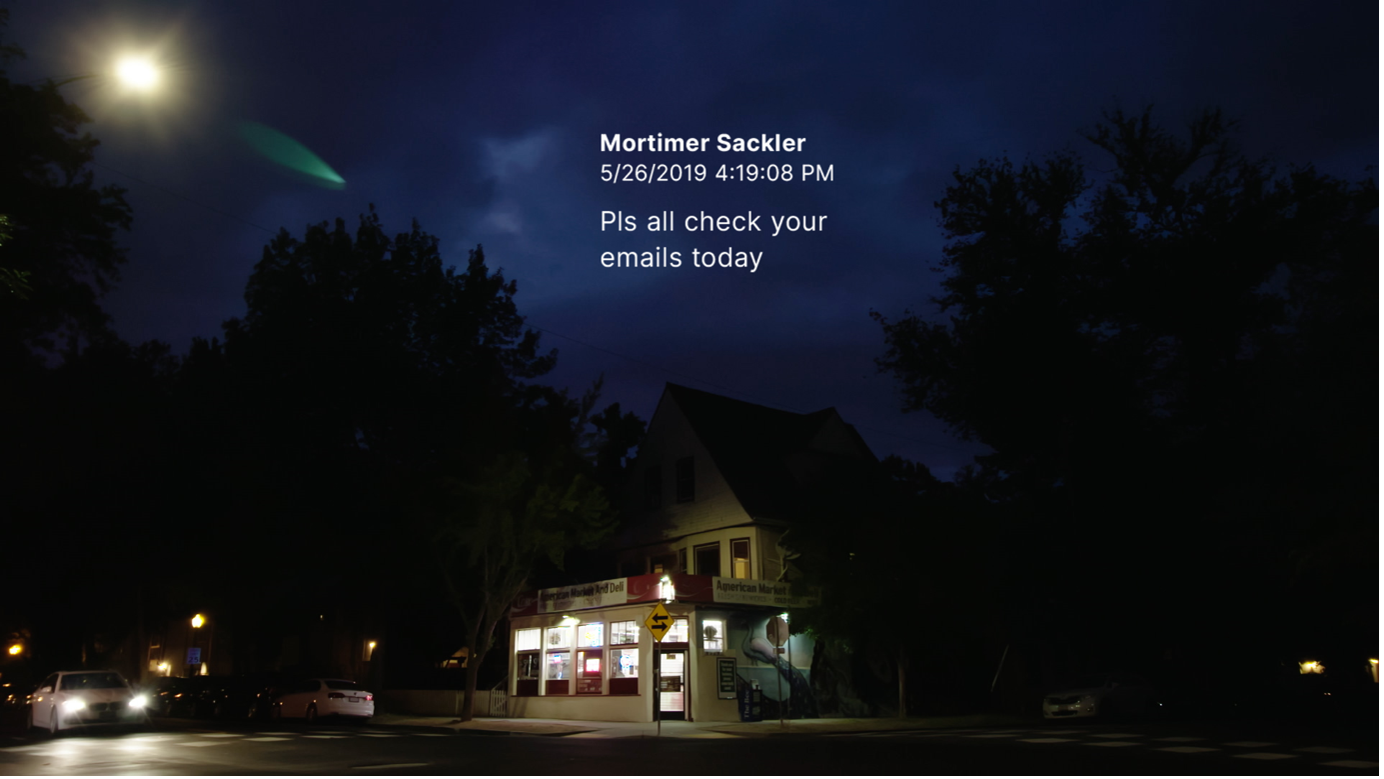
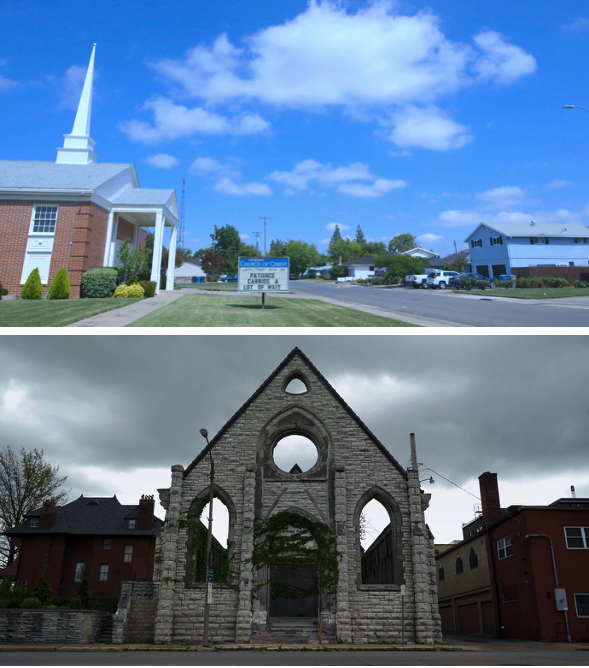
Harper and Stonehill originally planned to adopt a different perspective with a feature-length vérité documentary about an innovative opioid recovery programme at the University of California, Davis, where they had secured access and shot some initial material in 2019. When international lockdowns were put in place the following spring, the pair were compelled to rethink the project in practical and formal terms. The Family Statement makes use of WhatsApp messages exchanged among the Sacklers on a family group chat between 2017 and 2019, recovered from Purdue’s bankruptcy court proceedings. The messages discuss how the family should respond to mounting media scrutiny and legal actions; they appear, complete with typos and odd autocorrections, over static shots of exterior locations suggestive of suburban American life that acquire a diffuse melancholy, or even an uncanny menace. A brightly lit mini-mart at night evokes the lonely scenes of painter Edward Hopper (Fig. 1). Outside a modern church building, set against bright blue skies, a sign reads “Patience carries a lot of wait”, alluding to earthly suffering (Fig. 2). A later shot of another church, derelict with little more than the façade remaining, offers a counterpoint to promises of salvation (Fig. 3). These shots are interspersed with brief observational sequences of treatment and recovery sessions, interviews with health workers, and personal testimony from the father of a woman struggling with opioid addiction. Zoom footage from a Washington oversight committee hearing about Purdue, attended remotely by two members of the Sackler family, bookends the film. In this way, the film forces the Sacklers’s private correspondence into communication with individuals, communities, and indeed a nation affected by the opioid epidemic fuelled by Purdue.
Figure 1: The Sacklers’ messages appear over scenes of suburban American life.
The Family Statement (Grace Harper and Kate Stonehill). Field of Vision, 2025.
Image courtesy of the filmmakers.
Figure 2 (above): A church sign alludes to earthly suffering. Figure 3 (below). A derelict church offers a counterpoint to promises of salvation. The Family Statement. Images courtesy of the filmmakers.
In the context of the present special issue, what interests me about The Family Statement is how the production conditions generated by one health crisis—the “cramped space” of the COVID-19 pandemic—are brought to bear on the representation of another—the opioid epidemic—in ways that bring into focus issues that cut across both. This layered approach gives the film a formal density that, despite its short length, allows it to open larger ethical and political questions about responsibility, care, and their distortion within healthcare systems driven by profit. Directing its attention toward the collective and structural, The Family Statement avoids what Alexandra Juhasz and Alisa Lebow identify as the dominant logic of contemporary documentary, organised around “storied narratives”, “heroic characters” and “neatly linked conflicts and resolutions” informed by an “individualistic ideology [that] naturalizes bourgeois values and the economic system that supports them.” From a more general screen studies perspective, the film stimulates reflection on political aesthetics and temporality, often understood through theories that privilege duration and slowness as modes for provoking thought, particularly within the contemporary attention economy.
Building on these formal elements, The Family Statement channels ambivalent feelings regarding healthcare and other aspects of contemporary public and social life under late capitalism. It resonates with the dissonance that Jacqueline Rose finds central to the experience of the COVID-19 pandemic. Reflecting on this in 2023, Rose writes that “[o]ne of the most difficult aspects of these past years has been to square what felt at the start like a new global solidarity in response to the pandemic with the inequalities which slowly, or not so slowly, rose to the surface of public life, exposing the brute vulnerability of the subordinate, marginal, oppressed and the poor” (13). In the same text, Rose charts other ways in which the pandemic brought forth contradictions around care and harm in the context of social disparity that public health policy and messaging, in the UK and elsewhere, failed to recognise. She notes that the injunction to “stay at home” neglects “whether staying at home is possible, and what might follow when it is” (70–1). In this way, the policy disregarded the elevated risk to essential workers and those living in substandard, overcrowded accommodation or, worse, in situations of domestic violence. For many, the uncertainty engendered by the pandemic proved intolerable, and justifiable scepticism towards government and institutions was quickly overtaken by a raft of conspiracy theories described by the World Health Organization as an “infodemic”. While these false narratives promised to eliminate ambiguity, they also drove vaccine hesitancy, resistance to prevention measures, xenophobia and even incidents of violence.
The Family Statement does not try to resolve uncertainty. Instead, the film’s compressed, fragmentary form foregrounds the ambivalence generated by both the COVID-19 pandemic and the opioid crisis—a confusion about what and whom we can depend on, extending beyond healthcare and across social, political, and ethical life. This ambivalence is condensed in the film’s use of WhatsApp, the instant messaging app associated with meaningful quotidian forms of intimacy, but also with misinformation, political corruption and data exploitation. Of course, the messages in The Family Statement function primarily as exposition and evidence of the Sacklers’s unwillingness to assume responsibility for the harm caused by Purdue. They serve, too, as a marker of how the digital sphere has become a new terrain of investigation for documentary, supplanting its earlier evidentiary repertoire of moving and still photographic images, physical documents and oral testimony. Nevertheless, what adds to the charge of the WhatsApp messages in The Family Statement are the broader affective associations the platform has accrued during and since the pandemic. Launched in 2009 as a privacy-oriented and ad-free chat app, then acquired by Meta, WhatsApp has grown into a global communication platform with three billion users. During the COVID-19 lockdowns, it became a central feature of many people’s daily lives, providing a lifeline for social connection, notably through its group chat and media-sharing functionalities. Families, friends, colleagues, and neighbours set up group chats to share information and support each other emotionally and practically. However, as Amelia Johns, Ariadna Matamoros-Fernández, and Emma Baulch write, the group chat and sharing functions, alongside encryption and moderation, are also the main reasons why WhatsApp has become a “hub for harmful and misleading content”, including “high volumes of health misinformation” about COVID-19 and hate speech inciting mob violence in India and Mexico (120–21). WhatsApp has also become a key technology in global politics, raising concerns about transparency and accountability, as well as electoral manipulation. In this sense, WhatsApp functions in the film as an analogue to the healthcare systems implicated in both the opioid crisis and the pandemic: infrastructures of potential care and public good that can also give rise to harm.
These contradictions extend to the film’s presentation of the family as a social formation. In interview, Harper and Stonehill outline their wish “to portray the Sackler family as a family, by including intimate, familial messages that many of us can relate to (11/23/2017 11 01 15 PM Happy Thanksgiving everyone!)” (McCammon). They continue: “It is widely understood that addiction is something that is experienced by a family, so we were interested in the ways in which the Sacklers can also be understood, seen and experienced as a family” (McCammon). The inclusion of more personal and “relatable” material might suggest an invitation to empathise or identify with the Sacklers, and it is true that the variety of communication styles, occasionally terse exchanges, and comments about members of the older generation needing help with the app belong to a universal vernacular of family group chats. But insofar as the film allows audiences to understand the Sacklers as a family, it is as an extreme instance of its neoliberal form: “the hypercompetitive, neotraditionalist mobile family seeking to capitalise on the uneven spread of resources in order to maximise the futures of its own children” (Garrett, Jenson, and Voela ix). Although one individual expresses genuine concern for the continued suffering caused by opioid addiction, the WhatsApp conversation is dominated by comments that reveal the extent of others’ indifference and even defiance: “(10/24/2017 7:11:03 PM Why do we need to set up a separate foundation. No amount we put in will ever be enough)”. If the family was an element of the good life fantasy that sustained postwar capitalism, in The Family Statement it appears as a site of anxiety and defence: “To take care of oneself and one’s family in the neoliberal sense means to create a realm of invulnerability, a denial of mutual interdependence, a dis-engaged engagement with one’s psyche and the world” (Garrett, Jenson, and Voela x–xi).
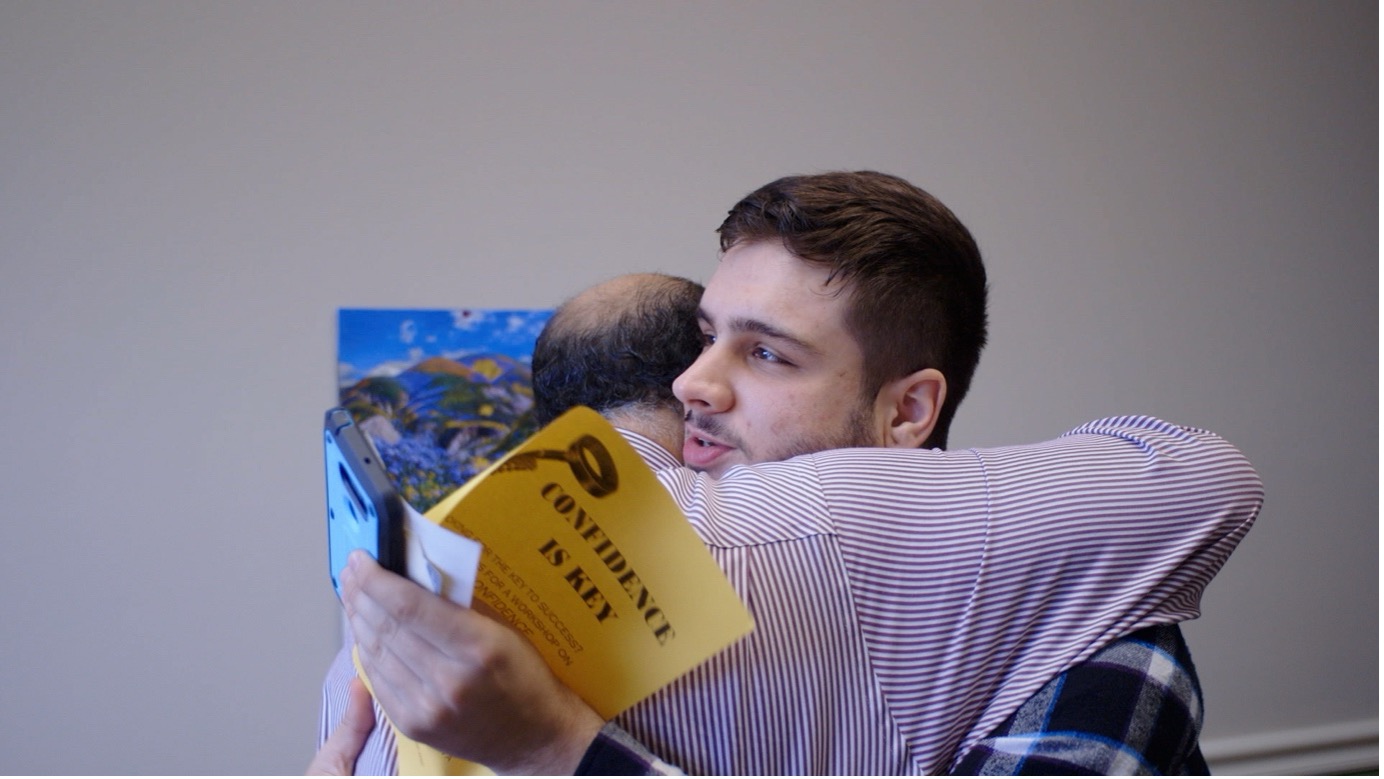
Figure 4: Scenes of recovery. The Family Statement. Image courtesy of the filmmakers.
The superimposition of the WhatsApp conversation over scenes largely devoid of people evokes the pandemic lockdowns and links the family’s self-protection to the general erosion of collective forms of life under neoliberalism that COVID-19 exposed and exacerbated. The spectral digital presence of the Sacklers further connects them to the immaterial flows of finance capital. This presentation of the family is thrown into relief by testimony from a man who explains that his daughter has struggled with opioid addiction. He speaks of how he feels physical pain seeing her suffer, bearing witness to the embodied reality of the opioid crisis as it rips through families and communities who cannot make themselves invulnerable. Meanwhile, the observational sequences of recovery meetings offer an important, hopeful glimmer of alternative forms of kinship and solidarity as we see people of different ages, genders, and ethnicities gather to support each other in their struggle to free themselves of opioid addiction (Fig. 4).
The Family Statement responds to two, overlapping crises, but notably avoids the tropes of what Pooja Rangan calls documentary’s “mode of emergency” (4), part of a humanitarian imaginary that “demands action over thinking, ethics over aesthetics, and immediacy over analysis” (3). Rangan argues that these films deploy impressions of temporal urgency and direct spatial presence—“immediations”—that purport to “humanise” endangered subjects while in fact exploiting and reinforcing their otherness. By refusing any spectacle of suffering and avoiding scenes or first-person testimonies of active addiction, Harper and Stonehill refocus our attention on the underlying conditions that endanger some people more than others. Its compressed form, use of mediated, digital encounters, and refusal of conventional character and narrative register the uncertainty that characterises contemporary experience. The film offers an important contemplation of harm when infrastructures that promise care—healthcare, family, technology—are complicit in its production.
References
1. Centers for Disease Control and Prevention. “Understanding the Opioid Overdose Epidemic.” CDC: Overdose Prevention, 9 June 2025, www.cdc.gov/overdose-prevention/about/understanding-the-opioid-overdose-epidemic.html. Accessed 19 Jan. 2026.
2. Fitzerman-Blue, Micah, and Noah Harpster, creators. Painkiller. Directed by Peter Berg, Netflix, 2023.
3. Garrett, Rachael, Tracey Jensen, and Anamik Saha Voela. “‘The Fantasies Are Fraying’: Neoliberalism and the Collapse of a Progressive Politics of the Family.” We Need to Talk about Family: Essays on Neoliberalism, the Family and Popular Culture, edited by Rachael Garrett, Tracey Jensen, and Anamik Saha Voela, Cambridge Scholars Publishing, 2016, pp. ix–xxvi.
4. Gibney, Alex, director. The Crime of the Century, HBO Documentary Films, 2021.
5. Harper, Grace, and Kate Stonehill, directors. The Family Statement. Field of Vision, 2023, https://fieldofvision.org/shorts/the-family-statement. Accessed 28 Jan. 2026.
6. Jamison, Leslie. “Foreword.” American Epidemic: Reporting from the Front Line of the Opioid Crisis,edited by John McMillian, The New Press, 2019, ix–xiii.
7. Johns, Amelia, Ariadna Matamoros-Fernàndez, and Emma Baulch. WhatsApp. Polity, 2025.
8. Juhasz, Alexandra, and Alisa Lebow. “Beyond Story: An Online, Community-Based Manifesto.” World Records Journal, vol. 2, 2018, worldrecordsjournal.org/beyond-story-an-online-community-based-manifesto. Accessed 16 Jan. 2026.
9. Keefe, Patrick Radden. “The Family That Built an Empire of Pain.” The New Yorker, 30 Oct. 2017, https://www.newyorker.com/magazine/2017/10/30/the-family-that-built-an-empire-of-pain. Accessed 18 Jan. 2026.
10. McCammon, Muira. “Grace Harper & Kate Stonehill: Documentarians of the Sackler Family.” Center for Media at Risk, 30 Mar. 2023, ascmediarisk.org/takeaways/grace-harper-kate-stonehill-documentarians-of-the-sackler-family. Accessed 16 Jan. 2026.
11. Poitras, Laura, director. All the Beauty and the Bloodshed. Neon, 2022.
12. Rangan, Pooja. Immediations: The Humanitarian Impulse in Documentary.Duke UP, 2017.
13. Rose, Jacqueline. The Plague. Fitzcarraldo Editions, 2023.
14. Strong, Danny, creator. Dopesick. Hulu, 2021.
15. World Health Organization. “Infodemic.” World Health Organization, www.who.int/health-topics/infodemic - tab=tab_1. Accessed 28 Jan. 2026.
Suggested Citation
Harries, Rhiannon. “Seeing the Opioid Epidemic through COVID-19: Ambivalent Aesthetics in The Family Statement (2023).” Alphaville: Journal of Film and Screen Media, no. 31, 2026, pp. 10–16. DOI: https://doi.org/10.33178/alpha.31.01
Rhiannon Harries is Assistant Professor of Film at the University of Nottingham. Her research focuses on questions of aesthetics, ethics and politics in contemporary documentary film. She is the co-editor of Education in Contemporary French Film (Liverpool UP, forthcoming) and of Land, Seas, Bodies—On the Cinema of Gianfranco Rosi, a special issue of the Journal of Italian Cinema and Media Studies.