|
    |

Making Dreams of Safety—A Series of Online Videos
Richard Whitby
[PDF]
Abstract
This piece is about the making of a YouTube series begun in 2021 called Dreams of Safety, mostly built around recordings of interviews. As the filmmaker, I explain the scope of the work and my approach and assess some of the results. The videos feature people across the world: interviewees have included a flight attendant based in Hong Kong and a former employee of Madame Tussauds, Delhi. I responded to the subjects of the conversations by building audiovisual contexts for them using simple, cheap and environmentally low-impact methods of online video capture and DIY animation. My aim was to work out a way to make experimental videos with other people within the restrictions and fears relating to COVID-19 that still shape social realities. Are there methods that can sustain such practices within other, overlapping crises in future? Is it practical for a visual artist to seek an audience online rather than in galleries and screenings? How can discursive, collaborative filmmaking practices be pursued without a budget or sharing physical space?
Article
In 2020 Nicholas Spice wrote that “COVID-19 has broken out of the ghetto, that place where other people die [...] if the capitalist system is to survive, we shall need to go back to our dream of safety, and fast.” What are the “dreams of safety”, to which many of us hoped to return? Who is the “we” that the author refers to here? How might some of the experiences of being “awoken” from various dreams be documented? In my YouTube series Dreams of Safety (Richard Whitby, 2022–), initially supported by the Sound/Image Research Centre at the University of Greenwich, I have sought to deepen these questions. At time of writing there have been seven episodes (each typically around ten minutes in duration), mostly built around recordings of interviews with people having very different experiences of massive disruptions to their lives—conversations intended to centre experiences other than my own; made possible by the cheap availability of video calls and video capture.
My aim was and still is to make experimental videos, with other people, responding to the restrictions and fears relating to COVID-19 shaping social realities in 2021, when the series went into production. The works have no budget and no crew; they include recorded video calls, rough DIY animation and often my own music (initial funding paid for title design by Rose Nordin and a USB microphone). In developing new methods of making, I hoped to find ones that could sustain discursive filmmaking practices (and reach an audience) within other, overlapping, and perhaps more socially disruptive crises in future. The series has already reflected other events, for example the political and social changes in Hong Kong since 1997 (“Episode 5: Jeffrey from Hong Kong”). However, this text will refer to the episodes that more directly document experiences of the COVID-19 pandemic.
My approach to videomaking is significantly influenced by artists such as Steve Reinke, John Smith (both of whom use first-person monologues in essay-like works), and Jennet Thomas (who uses absurdist writing and hand-made props and costumes in often satirical fictions). Before 2020 my films were predominantly made for installation in art galleries and sometimes screenings. This was my education and my filmmaking context. In choosing to site this particular series online and on YouTube specifically, my intention was to try to leave some of this behind, particularly the financial model of applying for project funding from bodies such as Arts Council England, directly or with arts organisations towards specific presentations of finished work (e.g., an exhibition). An impetus for the project was a feeling that these structures—and maybe the cultural categories I was used to—were called into question during 2020. Filmmaking—especially when involving the construction of sets and requiring international travel—can become highly impactful on the environment. Although streaming video also has an impact, this depends upon file sizes and video quality (as foregrounded by the Small File Film Festival); these videos are relatively small in their data footprints. I wanted to explore a lower-impact version of filmmaking while preserving the potential for international collaboration. I was also curious what would happen when my processes were put into the context of online content creation—which is also often made in DIY, small-scale productions.
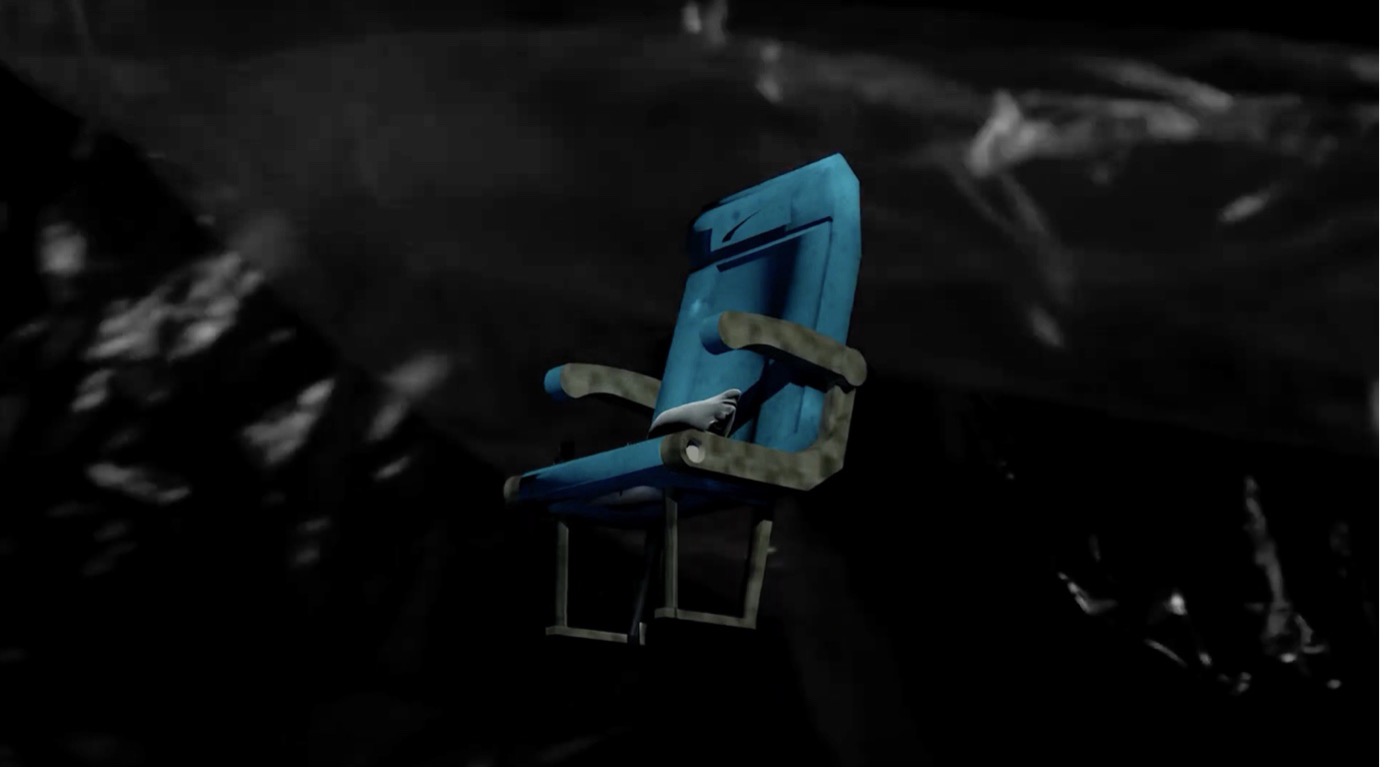
Figure 1: From “Episode 1: A Flight attendant based in Hong Kong”, by Richard Whitby.
Dreams of Safety.YouTube, 2022–. Screenshot.
Since the COVID-19 pandemic was not, and is not, over, I wanted a way of working that could adapt and respond to events rather than build towards any kind of final statement or finished “product”. Online forms such as podcasts and YouTube channels tend to be iterative; to grow and build upon particular elements, while discarding others. There is no “end point”, no “final piece”, no timescale or schedule, and no evaluative report to be written. Indeed, Dreams of Safety is still ongoing. So far, participants have been chosen for specific experiences or for differences in identity, geographical location, and/or profession. The videos feature people across the world: interviewees have included a flight attendant based in Hong Kong in Episode 1 (Fig. 1), a former employee of Madame Tussauds, Delhi (“Episode 2: Arushee from Delhi”) and a former lecturer who left the UK to pursue a Master’s degree in the US (below; “Episode 7: Kyran in LA”). I responded to the subjects of the conversations by building audiovisual contexts for them using simple, cheap, and environmentally low-impact methods of online video capture and DIY animation. Rather than working on research and planning towards a shoot, as in previous projects, captured conversation sits directly alongside my own responses to it, be those written, animated, or musical. The series likely bears the mark of what Catherine Elwes calls the “modernist inheritance” of video art (Elwes and Nishat 21), in that it tends to emphasise the specificity of a particular medium or form of dissemination as part of its meaning. Modes of production are left deliberately palpable.
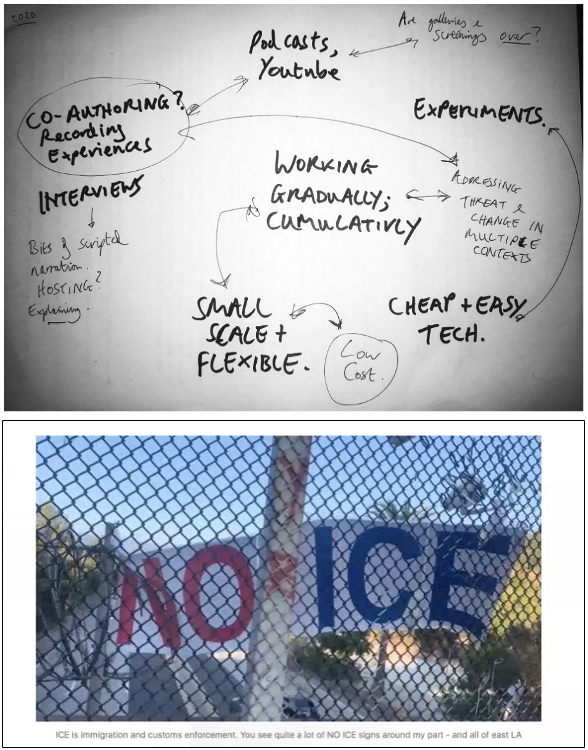
Figure 2 (above): Author’s notes showing ideation of the Dreams of Safety project, 2022.
Figure 3 (below): From “Episode 7: Kyran in LA”. Dreams of Safety. Screenshot.Experimenting with modes of image production and editing have allowed me to combine real and imaginary spaces on screen. In Episode 1, geographical spaces separated by thousands of miles are connected, and so are the very distinct experiences of a consumer of air travel and that of an airline worker, in a conversation that could not ever happen in the shared space of an airline cabin. Given that all of the recorded conversations have happened from participants’ homes, they have inevitably incorporated not only some of the feeling of the physical restriction of lockdowns, but also the potential to connect via online spaces. For example, “Episode 4: A Couple Separated” explored how a couple split between China and the UK maintained an intimate relationship, whilst Episode 7 (Fig. 3) involved me instructing Kyran as camera operator, via a string of WhatsApp messages.
Aside from the value to the viewer of any potential insight contained in the videos themselves, there may be useful models here for other filmmakers. I have found it a very practical to make work in this way, with access to participants made far easier with online video calls as a primary mode of shooting. However, working alone and without a supporting institution or production team has also meant that participants have tended to be one or two degrees of social separation away from me, at most, limiting the pool of potential subjects. Without the backing of an institution (beyond initial support within my university at the time), promoting the work could only happen via my own networks. Compared to the average experimental film screening, these works have good numbers of viewers but compared to a successful YouTube channel (one approaching monetisation, for example), the audience is tiny. In terms of financial sustainability, this project is akin to a cheap hobby—which may be no bad thing. Whether or not this is a sustainable method for me personally—both financially and in terms of finding collaborators—remains to be seen. The comparative environmental impact of this work, compared to other projects realised and disseminated in a different way, would also require more detailed analysis.
One thing that both online content and contemporary art/video art often share is the central position of the subjectivity of the maker themselves; indeed it could be said that there is a commonality between the appreciation of an auteur or artist and the parasocial relation to a maker afforded by online channels. In art, the wider oeuvre informs readings of initially esoteric aesthetics and modes of creating meaning. Online the cumulative effect of following channels, streams, and shows of the producer, over time, becomes vital to the legibility of their content: their recurring comedic “bits”, their specific social and critical context (YouTuber Contrapoints/NatalieWynn is a prime example of a creator who includes many call-backs and motifs in her video essays). Much as Spice’s ironic “we” implies a critique of the overrepresented white, male, middle-class subject (a group my own identity falls within), so my first episode attempted to acknowledge my starting point (i.e., my own experiences of lockdown and COVID-19) while deliberately trying to extend beyond it, by speaking to others and including their words in a much more immediate, albeit still edited, form.
Despite literally including my own voice in these works, my intention here has been to avoid making a definite, authorial statement. Rather than a fictional world that I then direct others within, in these short videos, both my interlocutors and myself are responding to circumstances more or less in the moment. Each video is only a collection of thoughts, in time. This is what these videos attempt to document: contestable, evolving experiences and ideas.
References
1. Elwes, Catherine, and Shirin Neshat. Video Art, a Guided Tour. I. B. Tauris, 2006.
2. Small File Media Festival. “Small File Media Festival.” smallfile.ca, last updated 2 Mar. 2025. Accessed 28 Mar. 2026.
3. Spice, Nicholas. “Diary: In the Isolation Room.” The London Review of Books, 4 June 2020, www.lrb.co.uk/the-paper/v42/n11/nicholas-spice/diary. Accessed 20 June 2023.
4. Whitby, Richard, director. “Episode 1: A Flight Attendant Based in Hong Kong.” YouTube, uploaded by Dreams of Safety, 26 Sept. 2022, www.youtube.com/watch?v=ggjJr-cAeNM&t=141s.
5. ——, director. “Episode 2: Arushee from Delhi” YouTube, uploaded by Dreams of Safety, 7 Oct. 2022, www.youtube.com/watch?v=qIExACCNRKs&t=365s.
6. ——, director. “Episode 4: A Couple Separated” YouTube, uploaded by Dreams of Safety, 6 Nov. 2022 www.youtube.com/watch?v=TaHNbl7WRFo&t=631s.
7. ——, director. “Episode 5: Jeffrey from Hong Kong” YouTube, uploaded by Dreams of Safety, 28 Aug. 2023, www.youtube.com/watch?v=y3SUyma4xKI&t=1s.
8. ——, director. “Episode 7: Kyran in LA” YouTube, uploaded by Dreams of Safety, 30 Dec. 2023, www.youtube.com/watch?v=GNkS-ajYjtI&t=2s.
9. Wynn, Natalie. Contrapoints. Last updated 7 Aug. 2023, www.contrapoints.com. Accessed 9 Aug. 2023.
Suggested Citation
Whitby, Richard. “Making Dreams of Safety—A Series of Online Videos.” Alphaville: Journal of Film and Screen Media, no. 31, 2026, pp. 101–105. DOI: https://doi.org/10.33178/alpha.31.08
Richard Whitby is an artist working in video and live performance. Richard completed his PhD at the London Consortium in 2016 on arena-based adaptations of screen narratives. His research interests include postcinema, experimental film, and urban regeneration. In 2019 Richard was awarded a Jerwood FVU commission that resulted in the film The Lost Ones and he releases music with Bulkwash. He teaches at Ravensbourne University London and at University of the Arts London.