|
    |

Memories of COVID-19 by Thai Film Crews: Encountering and Navigating Film Sets (Not) as Cramped Spaces (Video Essay)
Wikanda Promkhuntong and Natthanun Tiammek
[PDF]
Abstract
This video essay captures the voices of screen workers in Thailand during the pandemic, when a progressive political movement also emerged against the military-led government. Focusing on the moments when the crews were finally able to return to work under restrictions, the video essay highlights how different types of productions negotiate and regulate themselves so that they did not look like “cramped spaces” under the inspection of the health authorities. The challenges to following restriction rules mean that crews have to negotiate based on their management skills, lobbying power, and hustling savviness. The micro-stories explored in the video essay range from the pain of repeated deep-nostril swab tests, getting used to individual box lunches instead of socialised meals, to travelling with different permits to look for locations or props. The video essay format itself navigates restricted access to the sets using donated crew images, open-sourced soundtracks, and royalty-free footage from other crews elsewhere beyond Thailand. This collective bricolage highlights the possibility of a minor documentary to make visible off-screen stories that drive the local and global screen economy under lockdown.
Article
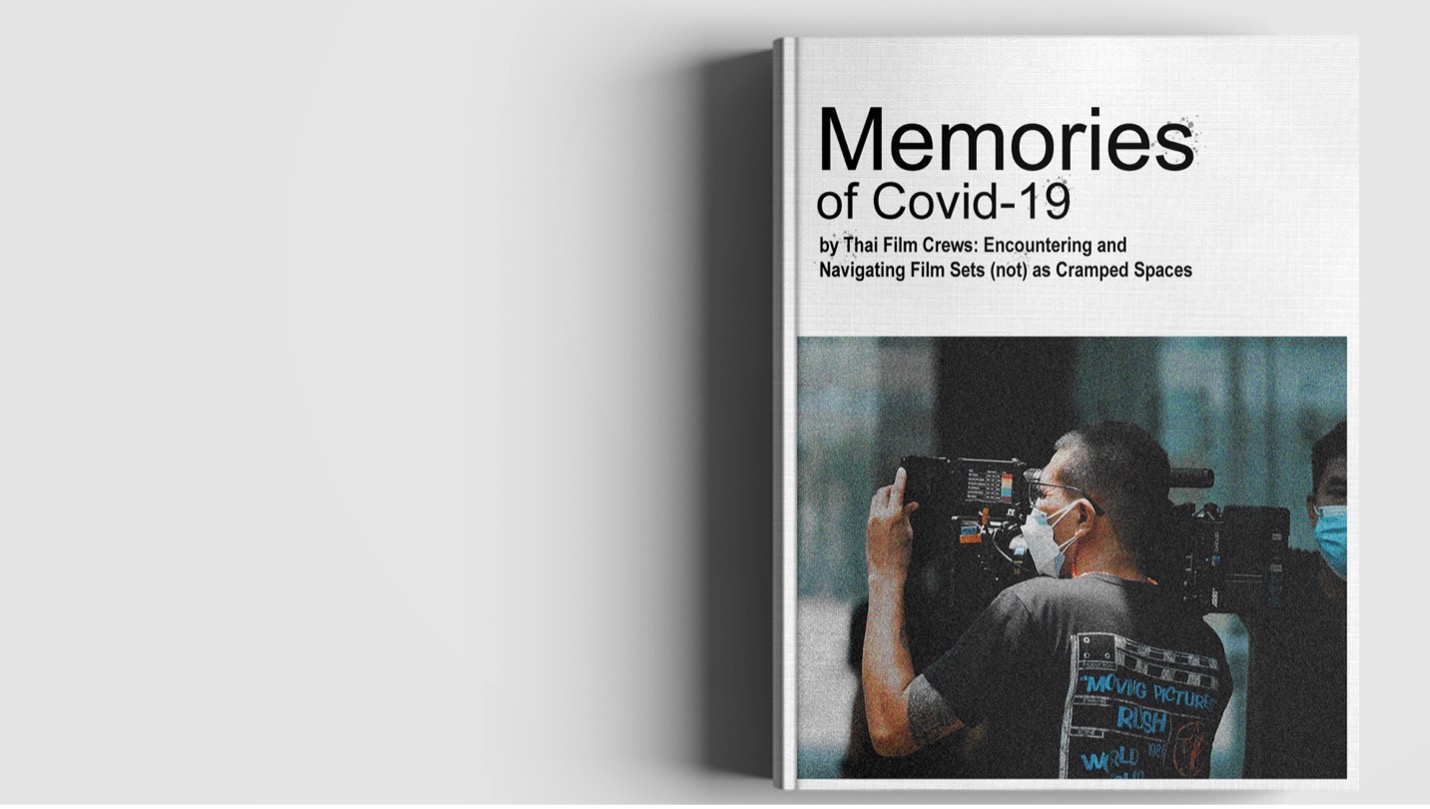
Figure 1: “Memories of COVID-19 by Thai Film Crews: Encountering and Navigating Film Sets (Not) as Cramped Spaces” (Wikanda Promkhuntong and Natthanun Tiammek, 2025). Screenshot and link to video essay.
“If the people are missing, minor politics begins not in a space of self-determined subjective plenitude and autonomy, but in ‘cramped space’.” (Thoburn 18)
Film productions rely on flows of people, data, funding, facilitated by infrastructure. The COVID-19 pandemic halted these mobilities worldwide. It was at this time of upheaval and deterritorialisation that screen workers in Thailand began to participate in public discourse in solidarity with street protests against the military-led government, which had been in power since the coup in 2014 (Promkhuntong 357). This video essay shares the voices of screen workers, mainly those in below-the-line job roles in various types of productions, as they reflect on the period following negotiations that made shooting possible under state restrictions. After the suspension of screen productions from March to May 2020, regulations were put in place to allow filmmaking under the following conditions: no more than fifty people per production; rapid antigen tests must be done every day before staff enter the set; crew members must keep a distance of at least two meters; all team members must be vaccinated; and crews must wear face masks at all times. However, we found through our interviews that these regulated spaces could not and were not organised uniformly nor did they all follow the same rules. The video essay is divided into three parts. The first focuses on the memories of different film sets and the adjustments crews had to make the sets “safe” in the eyes of the authorities. The second addresses the affective labour necessary to adhere to various pandemic regulations. The final part considers how the impossibility of following certain rules might be navigated and the creation of “(bio)politics from below” in order for the crews to protect themselves.
Figure 2: Moving beyond the project’s print publications with a video essay that encapsulates the struggles and strengths of Thai film crews during the pandemic. “Memories of COVID-19 by Thai Film Crews: Encountering and Navigating Film Sets (Not) as Cramped Spaces.” Screenshot.
The video essay begins by exploring the changes made by different sets in order for production to continue. Big-budget, “runaway” foreign film productions successfully lobbied to shoot with between two and three hundred staff on the set. A streaming company whose project was shot in Thailand allocated more than fifty million Thai Baht (US$1,406,100) for the new COVID-19 Health and Safety division that proactively employed sixty new crew members to manage new demands and hired a private hospital for consultation services and for daily testing of staff, with a total of between seven and eight thousand tests per film (Promkhuntong 362). Other kinds of smaller-scale foreign production, such as a one-day shoot for a commercial, were made possible via the QTake system, so that a client and a Director of Photography could work remotely from other countries with Thai crews, who stayed in separate rooms on the same site. These scales and costings were in stark contrast with much lower budget local productions, including those of the growing “Boys Love” genre, which had to reduce staff costs to allocate money for COVID-19 prevention. On one film set, a set medic had to act as a COVID-19 compliance person on top of the main job of assisting with any illnesses or accidents. The film addresses the intricacy of different job roles, from the catering team having to supply lunch in boxes instead of a shared, communal meal and throwing away the food if any of the core cast or crew members tested positive, to a prop master who had to navigate the closure of shops and travel further to look for materials.
Looking more closely at film crews’ embodied experiences and the memories of discomfort, the second part of the video essay explores the affective dimensions of labour in the screen industries. The oral testimony gathered through our interviews reveals the pain of having a deep nasal swab test every day for months during the shooting, the difficulty of breathing and communicating detailed information while masked, the tiredness from repeating things online due to the unstable internet connection, and the impossibility of wearing Personal Protective Equipment while shooting in the hot sun.William Walters and Barbara Lüthis’s remark that “[o]ne possible way of thinking about ‘cramped’ is by reflecting on the power of discomfort and the fact that discomfort is an overlooked but very significant and resonant affect in contemporary political life” (363).
The final part addresses rigid bureaucratic regulations, which meant that film crews adopted the practice of “hustling” (Langevang et al. 143; Promkhuntong 10) to create a kind of self-regulating “(bio)politics from below” whereby workers invented their own rules to circumvent top-down restrictions (Samaddar 127). They did whatever it took to be able to keep filming, so that they could get paid. This included producing documentation to gain permission to shoot and repeated trips to different authorities to get a filming permit and even physically hiding during set inspections to prevent the appearance of a cramped working space. With no financial aid for creative sectors—apart from the general relief package for unemployed workers of five thousand Thai Baht per month (approximately US$140) for three months between April and June 2020 (Promkhuntong 361)—by 2022, crews state that they were no longer afraid of the virus, but of starving. In this way, the limitations imposed upon their work and life during the pandemic created “movements of becoming and remaking” within the conditions of cramped space (Walters and Lüthi 359). Apart from remaking the rules on the set to keep themselves safe, film crews and other creative freelancers in Thailand also made industry history by forming an informal Creative Workers Union Thailand and different professional guilds (at the time of writing, these include the Film Editors Association of Thailand, the Thai On-Screen Actor Association, and the Screenwriters Association of Thailand). The research project on which this video essay is based is made possible by this solidarity movement and the support of various crew members.
As we conducted these interviews during the pandemic with no actual set visits involved, the video essay’s form navigates limited visuals using donated images, open-sourced soundtracks, and royalty-free footage from other crews beyond Thailand. The aesthetic choices and structure of the video essay have evolved from listing recurring new vocabularies for the film crews—such as Antigen Test Kit (ATK), Personal Protective Equipment (PPE), Qtake software, sentiments, and spatial experiences—to creating A-Z keywords of the film sets during the pandemic and matching them with photographs and sound as a moving-image album. In the context of this special issue, we restructured and shortened that earlier version and combined it with a theoretical reflection on different kinds of cramped spaces, aesthetics of discomfort, and solidarity. Altogether, the piece hopes to highlight a collection of memories and ideas that emerged during empty time without work that gave rise to the possibility of individual and communal self-reflection.
Acknowledgment: The research on which this video essay is based was funded by the Thai Humanities Research Forum, National Research Council of Thailand. We are grateful to all the Thai film workers who granted us the interviews and allowed us to share their memories and photographs. Additional Unsplash royalty-free works by Rendy Novantino and political protests footage by Filmocracy. English subtitles by Alongkorn Niyomdecha.
References
1. Langevang, Thilde, et al. “‘The Show Must Go On!’: Hustling Through the Compounded Precarity of Covid-19 in the Creative Industries.” Geoforum, vol. 136, 2022, pp. 142–52, https://doi.org/10.1016/j.geoforum.2022.09.015.
2. Promkhuntong, Wikanda. “Thai Creative Labour Solidarity, (Post)-Pandemic Precarity & Directions of Production Studies in the Global South.” International Journal of Cultural Studies, vol. 28, no. 2, 2025, pp. 354–69, https://doi.org/10.1177/13678779241273457.
3. Samaddar, Ranabir. A Pandemic and the Politics of Life. Women Unlimited, 2021.
4. Thoburn, Nicholas. Deleuze, Marx and Politics. Routledge, 2003.
5. Walters, William and Barbara Lüthi. “The Politics of Cramped Space: Dilemmas of Action, Containment and Mobility.” International Journal of Politics, Culture, and Society, vol. 29, 2016, pp. 359–66, https://doi.org/10.1007/s10767-016-9237-3.
Suggested Citation
Promkhuntong, Wikanda, and Natthanun Tiammek. “Memories of COVID-19 by Thai Film Crews: Encountering and Navigating Film Sets (Not) as Cramped Spaces (Video Essay).” Alphaville: Journal of Film and Screen Media, no. 31, 2026, pp. 91–95. DOI: https://doi.org/10.33178/alpha.31.06
Wikanda Promkhuntong is an Assistant Professor in film and cultural studies at the Research Institute for Languages and Cultures of Asia, Mahidol University. She has published on screen labour and production cultures, film authorship and cinephilia, film geography and fan tourism in various publications, including her monograph Film Authorship in Contemporary Transmedia Culture: The Paratextual Lives of Asian Auteurs (2023) and articles in Transnational Screens; International Journal of Cultural Studies; Culture, Theory and Critique; and Television & New Media. She is also a coeditor of the new book series “Asian Cinema and Screen” with De Gruyter Brill.
Natthanun Tiammek is a lecturer at Burapha University. He is the director of Krungkluea (2018), thesis film which draws on the global #MeToo movement to shape the story of the family power dynamic that led to sexual harassment, mixing Thai drama with Nirat mode of Thai traveling poetry. He has also published academic writings based on his MA thesis in Thai on the quality of life of below-the-line film crews. He is a member of the informal collective of Creative Labour Union Thailand (CUT) established during the pandemic.